
5 Abandoned European Castles & Villas You Can Legally Buy for $1
 Team Experts
15 October 2026 1:06 am
.
8 min read
Plenty of people see a headline about a castle for a dollar, click, and walk away disappointed. That reaction, however, doesn’t necessarily mean the offer is fake. Sometimes, it’s more indicative of a misreading — of what is actually being sold, and therefore, what the buyer is actually agreeing to.
For example, the dollar is real. Dozens of Italian towns sell abandoned houses for a single euro, a little over a dollar at today’s rates. But the building is rarely a castle, and the price is only the first line of a much longer invoice. Read as a turnkey fantasy, the deal is a trap. Read as what it is — a municipal contract that hands you a ruin in exchange for a promise to restore it — it’s one of the strangest and most useful property schemes in Europe. So, if you’re thinking about chasing a $1 castle or villa this year, before you write to a single town hall, consider what each program is really offering — and what it asks of you in return.
The five routes below split into two families. Four are €1 home schemes in Sicily and Sardinia, where the town sells you the walls and you sign up to rebuild them. The fifth is a national program that does hand out castles and villas, but as a long-term concession rather than a sale. Where you land across these is partly about budget. It’s also a question you’re going to be answering for years regardless: what do you want to be responsible for?
It also shapes everything that follows. The scheme you pick is the first line of the contract — it sets the deposit, the deadline and the penalty for missing one. So the choice is less like browsing a listing than deciding how you want the next three years to read, for the town that’s counting on you and for you, long after the keys change hands.
1. Mussomeli, Sicily: The Castle on the Hill
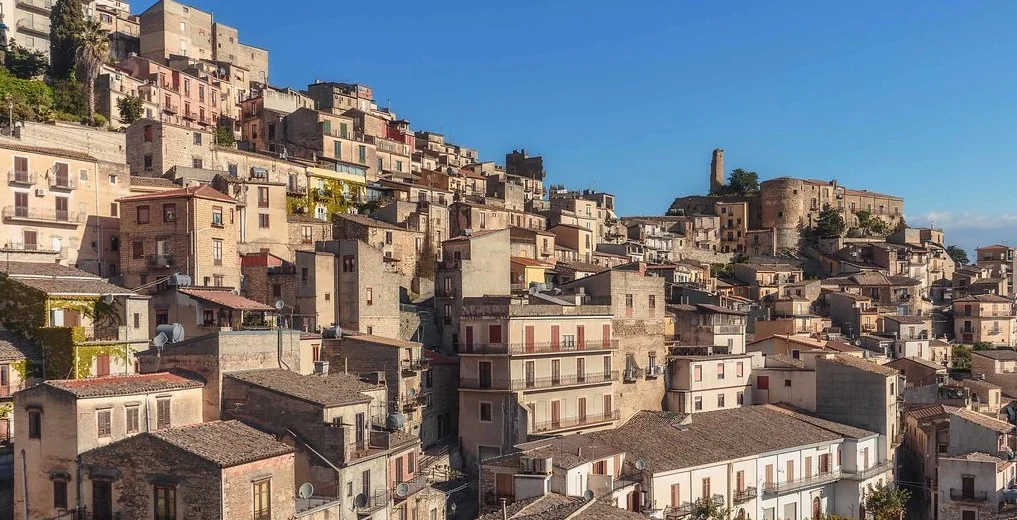
Most searches start here, and for good reason. The hill town sits in the middle of Sicily, roughly two hours southeast of Palermo, beneath a medieval castle that dominates the skyline. The castle isn’t part of the deal. The houses at its feet are. Case 1 Euro, a non-profit owned by the municipality, listed more than a hundred abandoned properties when it launched, with roughly 400 more expected. Local architects and engineers are on hand to help with the work, though buyers can also hire their own.
The terms are typical of Sicily. A €5,000 deposit comes back once the renovation is finished, and the work has to be completed within three years. Administrative fees add roughly $4,500, according to the project itself, and renovation estimates swing widely — from around €100 to €700 per square meter. Read the deposit clause closely. Miss the deadline and the town can take back both the house and the deposit.
2. Sambuca di Sicilia: The Pioneer
Sambuca helped start the wave. This hilltop village in western Sicily looks out over the Mediterranean, and it was among the first towns to put houses on the market for €1, loosening several of the usual formalities so buyers could move quickly. The structure will look familiar by now: a €5,000 security deposit, returned after the renovation, and three years to finish the job.
An early report put the minimum renovation spend at about $17,000. Treat that as a floor rather than a budget. Many of the houses are old and, in places, crumbling, and the real number depends on what’s left standing once the scaffolding goes up. The appeal needs no explaining — a view, a village and a price of one euro — but the honest question is whether you can fund everything else.
3. Cammarata, Sicily: Priority for Families
Cammarata sits about 37 miles southeast of Palermo, at an elevation of roughly 3,300 feet, with just under 6,300 residents. When the town opened its scheme, it offered homes at no cost and listed eight of them, while its mayor said at least 100 more stood abandoned. He has said it pains him to watch the historic center empty into ruin.
The conditions rhyme with its neighbors: a clear renovation proposal, completion within three years, and a deposit of around €5,000 that is refunded afterward. What sets Cammarata apart is who it wanted. Young couples with children were given priority. A scheme tells you who it’s hoping for, and if you fit that profile, it can move your application up the list. Availability shifts quickly, so check the town’s current notice before planning around it.
4. Ollolai, Sardinia: Stone Houses in the Barbagia Mountains
Sardinia is the other half of the story. Ollolai, nestled in the mountainous Barbagia region, offered around 200 abandoned stone dwellings at €1 each, and sweetened the offer with additional grants for families who set up residency. The island now has five active schemes, so it’s worth comparing neighbors before you commit.
These are houses with thick stone walls, small footprints and awkward internal layouts, many of them empty or only seasonally used for decades. That makes them hard to modernize and easy to love. If a glossy renovation isn’t the goal, and you’re drawn to a village that needs neighbors, this is where I’d start.
5. Italy’s State Property Agency: The Castles That Aren’t for Sale
This is the one route that really does deliver castles and villas, and it works differently. Through its Cammini e Percorsi program, the Agenzia del Demanio, Italy’s State Property Agency, offered 103 state-owned buildings — castles, villas, monasteries, towers, farmhouses — along historic walking and cycling routes, free of charge. Earlier rounds included a castle in Montescaglioso and a tower in Serramazzoni. The condition: restore the building and turn it into a tourist facility, whether a hotel, a restaurant or a hostel for pilgrims and cyclists.
The catch sits in the legal form. You become a concessionaire, not an owner. The state keeps the title; you fund the restoration and run the place for a set term, which reached up to 50 years in the original announcement. Think of it less as a purchase and more as a long lease with a very large renovation bill attached.
The program is still moving. In July 2026, the Agency put another 20 state properties out to tender, including lighthouses, former monasteries, historic palaces and old barracks. Offers for the 12 valorization concessions are due by noon on December 11, 2026. That round leans away from castles, but the mechanism is the same. Read the term sheet closely: nothing is handed over without a credible restoration plan, and a plan costs money before it wins anything.
How the $1 Deal Actually Works
The mechanics are shared across the €1 towns, even where the details differ. The municipality publishes a list of available houses, you express interest, and a formal application follows. In return for the symbolic price, you commit to a renovation plan and a deadline, usually backed by a deposit. Some Sicilian towns ask for around €5,000, refundable on completion, but amounts vary from town to town. Each town writes its own notice, called a bando, and that document is the only one that counts. Some towns pause their schemes after a successful round while others reopen later, so a list that was current last year may already be out of date.
Eligibility is wider than most people expect. Italians, EU citizens and non-EU buyers can all apply, provided they have an Italian tax code. What the purchase doesn’t buy is residency. Non-EU owners still follow visa rules, and without a visa a stay is limited to the Schengen allowance of 90 days in any 180. Anyone who already owns a main home in Italy is taxed on the new property as a second home.
Then there’s the real price. The house costs a euro; the renovation doesn’t. Published estimates range from tens of thousands of dollars to well over $100,000, depending on size, condition and local heritage rules. A 50% tax deduction on renovation spending, up to €96,000, exists in 2026 for main residences, which helps if you’re moving in and does little for a holiday home. Check eligibility with an Italian accountant before you count on it.
One More, Before You Write to the Town Hall
A fair number of buyers fall for the building and forget the paperwork. If you’ve found a house you can already picture finished, the next step isn’t an offer; it’s a budget. Add the deposit, the administrative fees, a local architect, a surveyor and a contingency, then decide whether the total still feels like a bargain. The $1 deal is worth taking seriously because it was never really about the price. It’s about a town betting that you’ll show up and stay. If you’re ready to be that person, it’s worth an application of its own.