
Inside 7 Ultra-Luxury Mansions That Offer Mind-Blowing ROI as Short-Term Rentals
 Team Experts
15 October 2026 12:58 am
.
8 min read
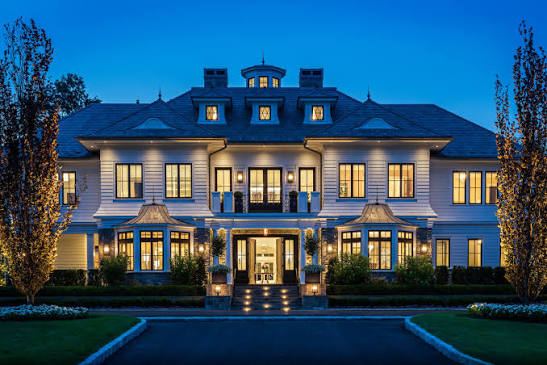
Plenty of investors buy a genuinely spectacular house and still watch it underperform as a rental. Such results, however, don’t necessarily reflect the quality of the property itself. Sometimes, they’re more indicative of an error in the rental strategy — a misreading of what makes the house exceptional, and therefore, what it should be paid for.
For example, a superb eight-bedroom estate may be listed like any other large home. Yet, it would be priced against houses with half the bedrooms and none of the staff. But, were it positioned as a fully staffed, all-inclusive retreat — one that sells the chef, the butler and the privacy rather than the square footage — it may have commanded several times the rate. The house was strong, but it was being measured up against the wrong bar. So, if you’re thinking about putting an ultra-luxury mansion into the short-term rental market this year, before running a single spreadsheet, consider how the seven properties below earn their money — and what each one is really selling — at length.
The seven fall into three families. The Staffed Estates sell service on top of space, whereas the Resort-Town Retreats sell the destination and the season. The Landmarks sell scarcity: the one house nobody else can offer. Where a property sits across these is partly about what it can earn. It’s also a question you’re going to be answering every booking season regardless: what do you want this house known for?
It also shapes how the house gets found. The positioning you choose is the first line of the story; it’s the one that will jump out at the concierge desks, villa agencies and travel editors who send guests your way. A great week travels into reviews and referrals, and it travels as whatever you framed it as. So the choice is less like filling in a listing form than deciding how you want the house to read later — for a repeat guest, or a buyer going through the booking history, long after the season ends.
Start with the market, because the market sets the ceiling. AirRoi, which defines luxury as a trailing-twelve-month average daily rate of $500 or more, finds that luxury rates run three to five times higher than mid-range, while occupancy runs one to eleven percentage points lower. In resort destinations with deep pools of wealthy guests, that gap closes: luxury occupancy sits at 47–50%, against 49–56% for mid-range. Allied Market Research puts growth in the luxury vacation rental segment at a 13.1% compound annual rate through 2031, outpacing the wider market. And early in 2026, luxury-tier rates rose 5.2% while budget-tier rates slipped 0.3%, according to Nestoria Estates.
The wider backdrop explains why. The average US short-term rental is now booked about half the year, around 50%, down from roughly 57% the year before, as new listings outran guest demand. The houses below don’t chase nights. They protect the price of each one.
One caveat before the list. Owners of private estates rarely publish their returns, and ROI depends on what you paid for the house and what it costs to run. The figures that follow are advertised starting rates, with gross-revenue arithmetic at a deliberately cautious 40% occupancy — below the luxury range above. Rates shift by season, so confirm current pricing before you underwrite anything. Treat the numbers as a way to compare houses, not as a forecast.
The Staffed Estates
The job of the first family is to sell more than a building. Guests pay for the people inside it, and the rate follows.
1. Villa Rosalina, Lake Como, Italy
A ten-bedroom lakeside estate in Lenno that sleeps 20. It comes with a football field, a heated indoor pool, breakfast, and a full staff of chef, housekeeper, villa manager, concierge and gardener. Rates start at €10,714 a night, about $12,536. At 40% occupancy, that’s roughly $1.83 million in gross annual revenue.
Sleeping 20 is the quiet lever. Split among a full house, the rate comes to about $627 a head, a number that reads very differently to a guest than the headline. Italy adds a twist: a city tourist tax is charged per person per night and settled locally, so build it into the guest’s all-in price before you quote.
2. Triton, Long Bay Beach, Turks and Caicos
An eight-bedroom beachfront estate that sleeps 16, with two pools and a tennis court. A private chef cooks three meals a day, and a butler, a concierge, nightly security and two round-trip airport transfers are included. Rates start at $9,000 a night; at 40% occupancy, that’s about $1.31 million a year.
The inclusions matter more than the beach. Each is a line item the guest would otherwise buy somewhere else, and the operator can fold it into the rate. The tax structure is also among the simplest of the regions BallerCribs compared, which keeps the final bill easier to explain.
The Resort-Town Retreats
The second family sells place and season. The house is the frame; the destination is the picture.
3. Casa Tania, Marbella, Spain
A nine-bedroom mansion with a glittering pool and generous deck, lawn and terrace space, engineered for easy shifts between indoor and outdoor living. It’s listed on Airbnb for about $10,100 a night (£7,539), with a seven-night minimum. At 40% occupancy, that’s close to $1.47 million.
The minimum stay is doing quiet work. At that rate, a single booking is worth more than $70,000, and fewer changeovers mean fewer idle gaps between guests and fewer cleaning cycles.
4. The Amagansett Estate, New York, USA
A seven-bedroom, eight-bath house with 200 feet of Atlantic frontage and 11-foot walls of glass, in one of the East Coast’s most coveted summer enclaves. It has been reported at around $400,000 a month. Over a three-month summer season, that’s $1.2 million from a single property.
Here, the season is the product. A house like this doesn’t need to be full in February to make its case; it needs to be unavoidable in July.
5. The Queensland Beach Villa, Australia
An indoor-outdoor beach mansion on Airbnb at about $3,811 a night (£2,816), with a one-week minimum. At 40% occupancy, that’s roughly $556,000 a year — the lowest on this list, and it’s included on purpose.
It’s the entry point. A lower rate means a lower bar to clear, and a single minimum booking is still worth around $26,700. For an investor testing the ultra-luxury short-term rental market, that’s a far gentler first step than a $50,000-a-night listing.
The Landmarks
The third family sells scarcity. Nobody else can offer this house, so nobody else sets its price.
6. The Historic Schloss, Baden-Württemberg, Germany
A historic schloss whose guests get exclusive use of a wildlife park, a lake and equestrian facilities. Rates are about $7,974 a night (£5,902) with a two-night minimum. At 40% occupancy, that’s roughly $1.16 million.
The grounds are the differentiator. A guest can rent a villa in any resort town, but not a private park with its own lake. The shorter minimum stay keeps the door open to bookings that a week-long requirement would turn away.
7. The Bel Air Estate, Los Angeles, USA
A nine-bedroom, 20-bathroom mega-mansion with a wellness spa, put up for rent at $1.5 million a month in 2019 — around $50,000 a night, or $18 million for a full-year lease. Compass called it the most expensive rental in the country at the time.
The listing is the useful lesson. It was an asking price, not a booking, and the broker described the rental as a way for the owner to cover costs while waiting for a buyer. Asking rates at this level tell you where the ceiling is. They don’t tell you who’ll pay it.
One More, if You’re Still Running the Numbers
Read the rate closely. Nothing here is a return until it’s measured against what the house cost and what it costs to run. One investor guide puts net yields on short-term rentals at 6% to 12% or more, depending on location and management, but that figure describes the category in general, not estates with full-time staff.
Three habits separate the houses that deliver from the ones that don’t. First, measure paid occupancy, which strips out owner stays and complimentary nights; a paid rate of 50% to 65% is considered competitive in most US markets. Second, price per guest, not just per night: a rate that looks steep for a house looks reasonable divided among 16 or 20 people. Third, bundle what guests would otherwise buy elsewhere — the chef, the transfers, the security — into the rate, so the premium has a reason behind it.
The seven houses above earn their numbers in different ways: staff, season, scarcity. What they share is a clear answer to the question every owner eventually gets asked by a guest, an agent or a buyer: what, exactly, is this house for? Answer that first, and the rate has something to stand on.